
垂直角度转子
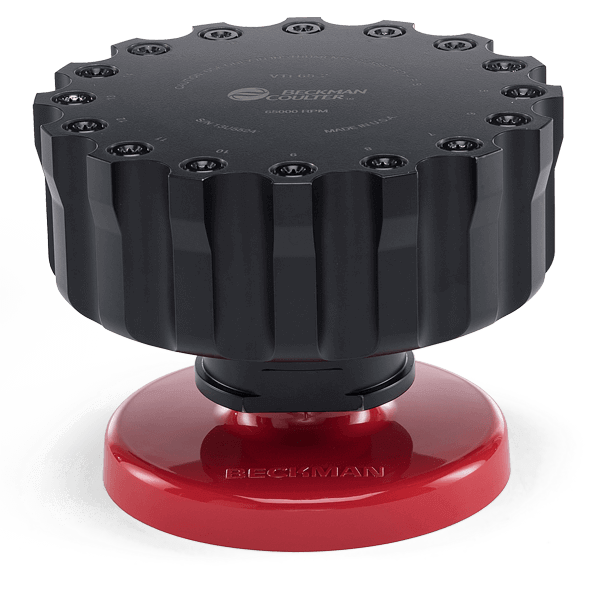
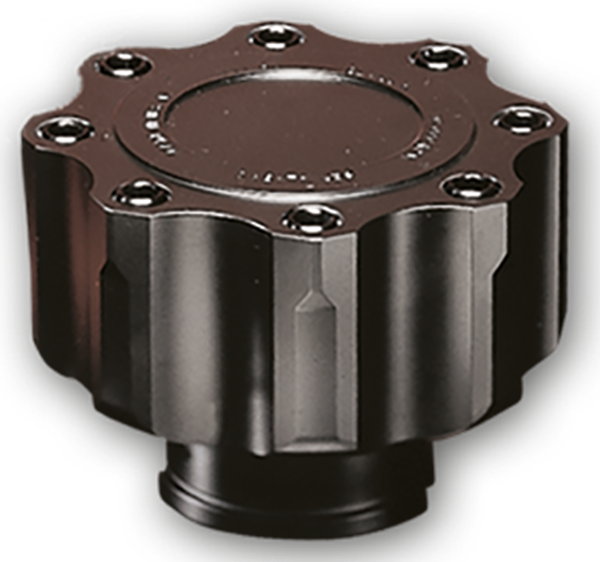
垂直角度离心管转子功能特色为任何种类转头之中路径长度最短、最快速运行时间以及最高的分辨率。
在垂直转子运行时,离心管为垂直。这些转子的短路径长度与低 K 系数意味着颗粒与沉淀物的行程距离很短,从而减少了应用的运行时间。
这不是用于沉淀最好的转子,因为在完全垂直离心管中的离心力让沉淀物分布在整个离心管的外墙。
垂直转子用于
- 等密度分离 – 特別是氯化铯中的 DNA 条带
- 梯度与密度缓冲垫分离,例如用于病毒颗粒分离
梯度密度缓冲垫分离:
- 增加停止于离心管底部高密度缓冲垫的密度层
- 最适合在“较软”的缓冲垫面上分离灵敏的沉淀样本


FAQ on Vertical Angle Rotors
What is the difference between a vertical rotor and a fixed-angle rotor?
Vertical rotors are primarily designed for density gradient and isopycnic separations, where particles move through a gradient to reach their equilibrium density. Fixed-angle rotors are typically optimized for pelleting applications, where particles sediment toward the tube wall and form a pellet. The choice depends on whether the goal is particle pelleting or high-resolution gradient separation.
When should I use a near vertical rotor instead of a vertical rotor?
Use a near vertical rotor instead of a vertical rotor if particles in your solution will pellet out of solution and risk contaminating your gradient bands. In a near vertical rotor, those containments will move to the bottom of the tube instead of remain on the side wall, as they do in a vertical rotor.
What applications are vertical rotors commonly used for?
Vertical rotors are commonly used for isopycnic centrifugation, density gradient separations, plasmid DNA purification, viral particle isolation, lipoprotein analysis and other ultracentrifugation workflows that require rapid equilibrium separations.
What is the k-factor of a centrifuge rotor?
The k-factor is a measure of a rotor's sedimentation efficiency. Lower k-factor values generally indicate faster particle sedimentation and shorter run times. When comparing ultracentrifuge rotors, the k-factor can help determine which rotor may provide the most efficient separation for a specific application.
Are vertical rotors suitable for pelleting applications?
Vertical rotors are generally not the preferred choice for pelleting. Because the tubes remain vertical during centrifugation, pellets may spread along the outer wall of the tube rather than forming a compact pellet at the bottom. Fixed-angle or swinging-bucket rotors are typically better suited for pelleting workflows.
Why are vertical rotors used for isopycnic centrifugation?
Vertical rotors provide a very short path length through the density gradient. This allows particles to migrate quickly to their equilibrium density, helping reduce run times while maintaining high separation resolution.
What is a vertical rotor?
A vertical rotor is an ultracentrifuge rotor that maintains sample tubes parallel to the axis of rotation during centrifugation. This geometry creates the shortest sedimentation path of any rotor design and helps accelerate density gradient separations.


